

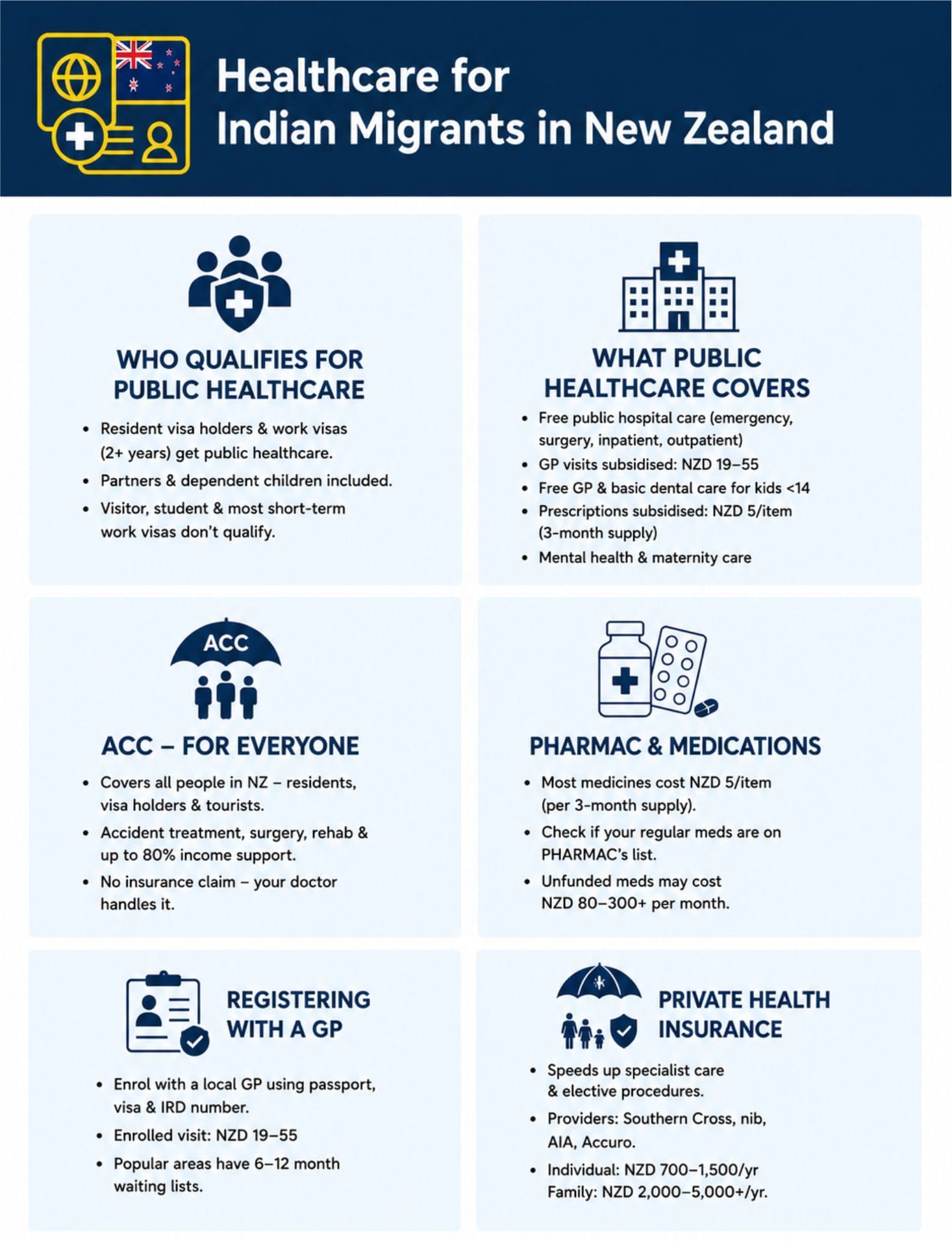
New Zealand's health system is publicly funded, nationally managed by Te Whatu Ora (Health New Zealand), and consistently rated among the better systems in the OECD. For immigrants, access depends on your visa status.
The core rule: Resident visa holders and people on work visas valid for two years or more qualify for publicly funded healthcare from the date their visa is granted. Their partners and dependent children are included.
Visitor visas, student visas, and most short-term work visas do not qualify. If you are on a student visa, you must carry private health insurance - most universities require proof of it before enrolment.
Official eligibility rules are on Health New Zealand's website.
For eligible residents and qualifying work visa holders:
What is not covered even for residents:
The Accident Compensation Corporation (ACC) is one of New Zealand's most notable institutions. It covers all individuals in New Zealand - citizens, residents, visa holders, and tourists - for the costs of medical treatment following an accident.
If you slip on stairs, are injured in a car accident, or tear a ligament playing cricket on the weekend, ACC covers your emergency treatment, surgery, rehabilitation, and up to 80% of your lost income during recovery. You do not need to file an insurance claim. Your doctor does it for you.
The trade-off: New Zealand does not allow personal injury lawsuits for accident-related harm. The country traded legal action for universal accident cover. More information at ACC's website.
PHARMAC manages the list of publicly funded medicines in New Zealand. Most prescriptions cost NZD 5 per item for a three-month supply for eligible patients. Over 65, prescriptions are free.
Not every medication available in India is funded in New Zealand. Before you move, check whether your regular medications appear on PHARMAC's funded schedule. Unfunded medications are available by prescription at full cost - NZD 80–300+ per month for some specialist drugs.
Your first step after arriving is registering with a GP (General Practitioner). Enrolled patients pay NZD 19–55 per visit. Non-enrolled walk-in patients pay NZD 80–150 or more.
To enrol, visit a medical centre near your address with your passport, visa documentation, and IRD number. Find practices accepting new patients near you at HealthPoint.
In Auckland and Wellington, GP practices in popular suburbs have 6–12 month waiting lists for new patients. Indian community networks - temple noticeboards, South Auckland WhatsApp groups - are consistently the fastest source of referrals to practices currently accepting enrolments.
Many residents with full public healthcare access also take out private health insurance. The reason is waiting times. Public hospital care for non-urgent (elective) procedures can involve months or years of waiting. Private insurance provides faster specialist appointments, private hospital access, and choice of surgeon.
Providers: Southern Cross Health Society (largest in NZ), nib, AIA, Accuro.
Individual basic plan: NZD 700–1,500 per year depending on age and excess level chosen. Family plan: NZD 2,000–5,000+ per year.
You can only hold private health insurance in New Zealand if you are also eligible for public healthcare. Private insurance supplements the public system.
Indian skin (higher melanin) produces less Vitamin D at New Zealand's latitudes, especially in winter. Vitamin D deficiency is common among Indians in New Zealand who work indoors. It affects energy levels, immunity, and bone health. A simple blood test through your GP checks your level.

