

An Indian Police Clearance Certificate, or PCC, is a commonly requested document for visas, immigration, and permanent residency abroad. It might also be required within the country for some special reasons. It serves as official proof that you do not have a criminal record, or it details any existing record verified by the Indian police authorities. Because of its importance, many applicants assume that fingerprint submission is mandatory for obtaining a PCC. However, the reality is quite different. Fingerprints do play a huge role in India’s criminal and investigation purposes, but not in the way you’d think.
This document is required from people who must prove they do not have a criminal record in India. And this comes down to three main categories: Indians moving abroad, foreigners who lived in India for a significant period, and individuals requiring a PCC for certain sensitive purposes within India.
Indian Citizens Going Abroad
If you have an Indian passport, you will need a PCC for:
Foreign Nationals Who Lived in India
If you are not an Indian but have spent more than 6 months living in India for work, study, or residence, you may need an Indian PCC when:
Though it’s rare, some entities within India may ask for a PCC:
Who does NOT need a PCC? If you’re just going for a vacation, or other short-term purposes like attending business meetings, conferences, meeting friends or relatives abroad, you do not need a PCC. You just need a relevant visa and reason-relevant documents.
Is Fingerprinting Required to Get an Indian PCC?
The PCC requirements discussed in almost all of the situations above refer to the type of background check where fingerprints are not required. This is the standard Indian PCC, and it is the version accepted by the majority of countries abroad.
A background check done using fingerprints is a completely different process and involves different authorities altogether. It is not for public or civilian fingerprinting needs.
The basic difference is as follows:
| Parameter | Standard PCC | Fingerprint-Based Background Check |
| Issuing Authority | Regional Passport Office (RPO) / Passport Seva Kendra (PSK) | Specialized Forensic Agencies / State Police CID |
| Verification Method | Name, DOB, Address check against the national passport database and local police records. | Fingerprint matching against criminal databases maintained by NAFIS. |
| Typical Use Case | General Immigration | Strictly reserved for official law enforcement use, like arrested or convicted criminals, suspects, unidentified bodies, etc. |
When Do You Need Fingerprints? All destinations abroad, such as the USA, Canada, the UK, Australia, and New Zealand, only ask for the standard Indian PCC issued by the Passport Office, which does not require fingerprint submission. However, some foreign governments require your fingerprints, but they require you to get them done on a specific card to check against their own international databases, not the Indian one.
NAFIS has over 1,300 fingerprint workstations across the country, but you cannot just walk into the office to have your fingerprints taken. The process, machines, and the equipment are strictly designed for a specific group of people, arrested criminals, investigation or identification of victims, or chargesheet suspects of the country.
Also if you’re joining some specialized sectors in India, like the defense or intelligence, your fingerprints will be taken only through established government services and run against the NAFIS database to check for any past criminal history across India. This is done as a part of the joining process.
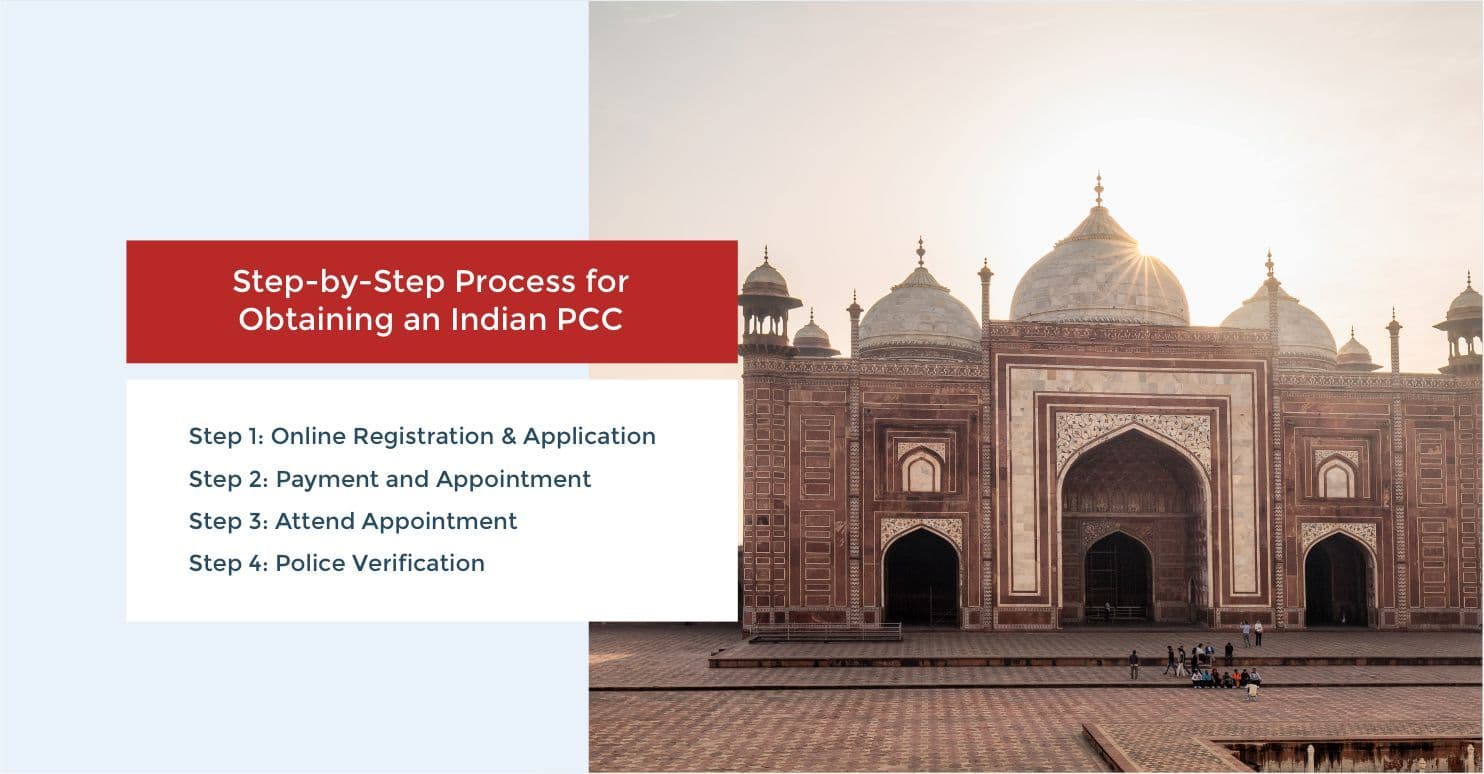
To obtain this PCC, you must apply online through the official portal, visit the nearest PSK for document verification, and complete local police verification at your registered address.
The entire process of getting your police clearance certificate is managed through the Passport Seva portal.
Step 1: Online Registration & Application
Step 2: Payment and Appointment
Since you cannot walk into a PSK without a scheduled slot, you have to make an appointment online.
Step 3: Attend Appointment
You must appear in person for document verification and photograph capture. The documents usually required are your passport, proof of residence, a copy of your visa, and any other supporting documents like your employment contract, or admission letter from the university.
You can check the exact list of documents here!
An officer there will verify your originals. Then your photo will be taken digitally.
Step 4: Police Verification
After your appointment, your file will be sent electronically to the local police station tied to your address. A police officer will either visit your home or ask you to come to the station with two witnesses and identity proofs. They will check for any criminal records or pending court cases.
You can track the status of your police report on the Passport Seva website using your ARN.
Once you pass the check and the "Clear" report is uploaded by the police from their end, you will receive an SMS stating your PCC is ready. You can usually download the electronic PCC from the portal or collect the physical certificate from the RPO as instructed.
How Can NRIs Apply for an Indian PCC from Abroad
This is one of the most commonly asked questions, as a large number of Indians live abroad. So, let’s understand the process for Non-Resident Indians (NRIs).
For example, suppose you are an Indian citizen living in Canada, and the immigration department there asks you to provide an Indian PCC for permanent residency. In that case, this is the process you need to follow:
Basically, the process remains more or less the same. The Indian embassy or mission abroad, wherever you are staying, acts as the intermediary in obtaining your PCC from India.

